

You're training hard. You're sleeping enough. But you're not building muscle.
Or you're building muscle but not getting stronger. Or you're eating a ton but feeling like garbage. The problem is probably nutrition.
And I don't mean complicated meal plans. I mean fundamentals: protein, calories, carbs, fat, and one simple principle: consistency.
Protein: The Non-Negotiable Foundation
Strength athletes need 0. 7-1g of protein per pound of bodyweight daily. This is the consensus of decades of research.
Why? Protein is the building block of muscle. Without adequate protein, your body can't synthesize muscle (muscle protein synthesis).
You can train hard, sleep well, but without enough protein, your body will not build muscle. Real numbers: You weigh 200 lbs.
You need 140-200g of protein daily. That sounds like a lot if you're eating 80g currently. But here's how: Breakfast: 3 eggs + Greek yogurt + oats = 40g protein.
Lunch: Chicken breast + rice + veggies = 45g protein. Snack: Protein shake = 30g protein.
Dinner: Beef + potatoes + veggies = 50g protein. Total: 165g protein.
Done. It's not complicated. It's consistency.
Where to Get Protein (Practical Sources)
ANIMAL SOURCES (Best for strength athletes): Chicken (35g per 100g), beef (26g per 100g), eggs (6g per egg), Greek yogurt (10g per 100g), cottage cheese (11g per 100g). Fish is excellent too (25g per 100g). These are complete proteins (all amino acids).
PLANT SOURCES: Lentils (9g per cooked cup), chickpeas (15g per cooked cup), tofu (15g per 100g), tempeh (19g per 100g). These are lower protein density but work. Combine with grains (rice + beans) for complete amino acid profile.
SUPPLEMENTS: Whey protein powder (25g per scoop), casein (beneficial for slow digestion before bed). These are convenient, not necessary.
Protein Timing: Does It Matter?
Short answer: Not as much as people think. Total daily protein matters far more than exactly when you eat it. That said: Consuming protein post-workout (within 2 hours) is beneficial.
Your muscles are primed for protein synthesis. But don't stress. A meal 2 hours post-workout is fine.
Distributed protein throughout the day (30-40g per meal) is optimal compared to 100g in one meal and 20g another. Real world: A lifter eats 200g protein total but only 40g for breakfast, 50g lunch, 110g dinner.
Not ideal. Another lifter eats 160g total but 40g every meal, plus 40g snack. Better distribution.
The second lifter will likely build muscle better. But the first lifter will still build muscle if total is adequate.
Calories: The Foundation for Building Muscle
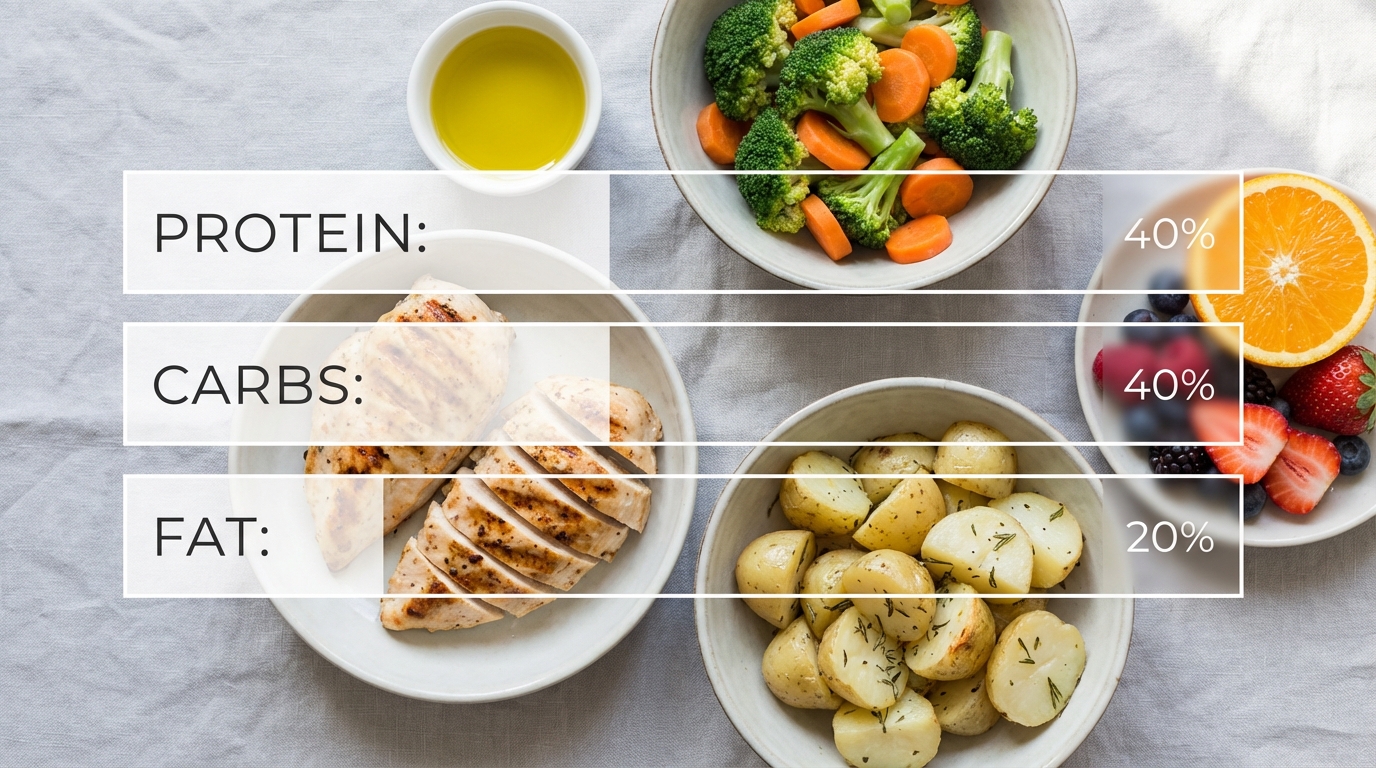
To build muscle, you need a caloric surplus: 200-500 calories above maintenance daily. If your maintenance is 2500 calories (estimated: bodyweight x 14-16 depending on activity), you need 2700-3000 daily to build muscle optimally.
Why? Your body needs energy to build tissue. Too small a surplus (50 cals above maintenance) = minimal muscle building.
Too large a surplus (1000+ above maintenance) = building more fat than muscle. 200-500 is the sweet spot: 0.
5-1 lb weight gain per week. That's mostly muscle with some fat (which is normal and acceptable). Real calculation: You weigh 200 lbs.
You train 4 days per week. Your maintenance is probably 2700 (you maintain at this). Add 300 calories: 3000 daily.
Track for 2 weeks. If you're gaining 0. 5-1 lb per week, you're dialed in.
If you're gaining 2+ lbs per week, cut 200 calories. If you're not gaining, add 200 calories.
The Calorie Tracking Caveat
You don't need a scale and MyFitnessPal for life. But for 4-8 weeks, actually track your calories. Get the data.
Most lifters think they eat 200g protein and 3000 calories. They actually eat 120g protein and 2400 calories. Tracking shows reality.
After 4-8 weeks of tracking, you develop intuition. You stop needing the scale. You just know how much to eat.
So: Weeks 1-8: Track everything meticulously. Weeks 9+: Use intuition, occasional checks.
This approach works.
Carbohydrates: Fuel for Hard Training
Carbs provide glycogen for your muscles during training. Without adequate carbs, your lifts suffer. Aim for 2-3g per pound of bodyweight daily depending on training frequency.
If you train 4x per week heavy, closer to 3-4g. If you train 2x per week light, closer to 2-2. 5g.
Real numbers: You weigh 200 lbs, train 4 days heavy. You need 600-800g carbs daily. That sounds insane.
But: Breakfast: Oats (50g). Lunch: Rice (60g).
Pre-workout snack: Banana (30g). Post-workout: White rice or pasta (100g).
Dinner: Potatoes (50g). Plus other meals. You hit 600g.
Sources: Rice, oats, potatoes, pasta, bread, fruits, honey. Don't overthink it. Eat carbs.
You'll perform better and recover better.
Carb Timing: When It Actually Matters
Pre-workout carbs (1-2 hours before): Give your muscles glycogen. You perform better. 30-50g is fine.
Examples: banana, oats, toast. Post-workout carbs (within 2 hours): Replenish glycogen after training.
Your muscles are primed. 50-100g depending on workout intensity. Examples: white rice, pasta, fruit, dextrose powder.
Other meals: Distribute carbs throughout the day. Doesn't matter when specifically. Total daily matters most.
Real example: A lifter trained with no pre-workout carbs. His energy was low, lifts were hard. He added a banana 1 hour before training.
His energy was better, lifts were better. Then he trained fasted. He felt worse, lifts suffered.
Carbs matter for performance. Post-workout carbs also matter for recovery, but less than people hype it.
Fat: Often Underrated and Neglected
Fat is essential for hormonal production. Testosterone, growth hormone, and IGF-1 all depend on adequate dietary fat. Aim for 0.
3-0. 4g per pound of bodyweight daily. If you weigh 200 lbs, that's 60-80g fat daily.
Sources: Olive oil, avocado, nuts, fatty fish (salmon), eggs, beef. Real distribution: Breakfast: Eggs (14g fat).
Lunch: Chicken with olive oil (10g fat). Snack: Almonds (8g fat).
Dinner: Beef (15g fat). Plus other meals: 60-80g total.
This is easier than people think. The fear of fat is old. Dietary fat isn't making you fat.
Excess calories do. If you eat 200g protein, 600g carbs, and 70g fat—all within your caloric surplus—you'll build muscle, not fat. Fat is part of the diet.
Micronutrients: The Often Overlooked Piece
ZINC (50-100mg daily): Critical for testosterone production. Oysters have the most (100mg per serving). Beef has 10-15mg per serving. Red meat + oysters = good sources. Deficiency: weak immunity, lower testosterone, poor recovery.
MAGNESIUM (400-500mg daily): Involved in 300+ enzyme reactions. Nuts, dark chocolate, pumpkin seeds are good sources. Deficiency: poor sleep quality, muscle cramps, decreased strength.
IRON (10-18mg daily for men, higher for women): Carries oxygen in blood. Red meat has 3-4mg per serving. Deficiency: fatigue, weakness, poor training performance.
VITAMIN D (2000-4000 IU daily or more): Regulates testosterone, mood, immune function. Sun exposure is best (15-30 min daily). Supplementation if you're deficient. Deficiency: mood issues, lower testosterone, poor recovery.
Real Example: Day of Eating for a Strength Athlete
Athlete stats:
Bodyweight: 200 lb
Calorie target: ~3000 kcal
Protein: 150–180g
Carbs: ~300g
Fat: ~80–100g
Breakfast
3 eggs — 18g protein, 15g fat, 0g carbs
Oatmeal with honey — 8g protein, 5g fat, 60g carbs
Milk — 8g protein, 8g fat, 12g carbs
Total:
34g protein, 28g fat, 72g carbs
Mid-Morning Snack
Apple
Almonds
Total:
5g protein, 10g fat, 25g carbs
Lunch
Chicken (200g) — 50g protein, 8g fat, 0g carbs
White rice (150g cooked) — 3g protein, 1g fat, 60g carbs
Olive oil drizzle — 0g protein, 10g fat, 0g carbs
Total:
53g protein, 19g fat, 60g carbs
Pre-Workout
Banana
Total:
1g protein, 0g fat, 27g carbs
Post-Workout
Protein shake
Dextrose or fast-digesting carbs
Total:
30g protein, 2g fat, 50g carbs
Dinner
Beef (200g) — 45g protein, 20g fat, 0g carbs
Potatoes — 2g protein, 0g fat, 30g carbs
Vegetables
Total:
47g protein, 20g fat, 30g carbs
Evening
Greek yogurt
Total:
15g protein, 5g fat, 10g carbs
Daily Totals (Approximate)
Protein: ~184g
Fat: ~84g
Carbohydrates: ~274g
Calories: ~2950 kcal
Close enough. Simple. Repeatable. Works.
Supplements: Nice-to-Have, Not Need-to-Have
You don't need supplements to build muscle. But some are useful: Whey protein: Convenient.
If you can't hit protein target, use whey. Creatine monohydrate: 5g daily, proven to increase strength and muscle over time.
Cheap, safe. Multivitamin: Insurance policy if your diet isn't perfect.
Not a replacement for real food. Caffeine: Improves training performance and focus.
Coffee is fine. Pre-workout supplements: Usually overpriced caffeine + other ingredients.
Coffee + beta-alanine is cheaper and works. Most other supplements (testosterone boosters, BCAAs, branched chain anything): Not necessary.
Total protein and calories matter infinitely more than any supplement.
The Common Mistakes (And How to Avoid Them)
EATING PROTEIN TOO LOW: Thinking 80g is enough when you need 140-200g. Eat more protein.
BEING IN TOO BIG A SURPLUS: Eating 4000 calories when you only need 3000. You'll build muscle but also fat. Stay at +200-500.
IGNORING CARBS: Thinking carbs are bad. They're not. They fuel your training. Eat them.
NOT TRACKING INITIALLY: Guessing your intake and wondering why you're not progressing. Track for 4-8 weeks. Get real data.
SKIPPING MICRONUTRIENTS: Thinking only macros matter. Zinc, magnesium, iron, vitamin D matter. Get them.
BEING INCONSISTENT: Eating well Monday-Friday, terrible on weekends. Consistency matters more than perfection.
The Real Truth About Nutrition for Strength
Nutrition isn't complicated. It's boring. It's consistent.
Eat enough protein (0. 7-1g/lb). Eat enough calories (+200-500 surplus).
Eat enough carbs (2-3g/lb). Eat enough fat (0. 3-0.
4g/lb). Get your micronutrients. Track for a month to establish baseline.
Then trust the process. That's it. Build muscle.
Get stronger. Repeat for years. This works.
Full stop.
Fueling Strength With Tsunami Barbell
Training hard is only half the equation.
Strength is built through intelligent programming — and supported through intelligent nutrition.
Tsunami Barbell integrates performance-based programming with real-world fueling principles. Instead of guessing whether you're eating enough to support progress, your training structure aligns with recovery demands.
Heavy weeks require adequate fuel.
Volume blocks demand carbohydrate support.
Peak phases require precision.
Nutrition isn't complicated. But it must match the stimulus.
Train smart. Fuel accordingly. Progress consistently.
Frequently Asked Questions About Nutrition for Strength Athletes
How much protein do strength athletes really need?
Most research supports 0.7–1g per pound of bodyweight daily.
Going above that provides minimal additional benefit for muscle growth.
Consistency matters more than perfection.
Do strength athletes need carbs?
Yes. Carbohydrates replenish glycogen and directly support training performance.
Low-carb approaches often reduce strength output and recovery capacity for high-intensity lifting.
Is bulking necessary to build strength?
A small caloric surplus (200–500 calories) is optimal for muscle gain.
Large surpluses increase fat gain without significantly accelerating muscle growth.
Should I track calories?
Tracking for 4–8 weeks is highly recommended.
It builds awareness and prevents under-eating or accidental over-eating. Long term, intuition improves — but data first.
Do supplements matter?
Only after fundamentals are covered.
Protein, creatine, caffeine — useful.
Testosterone boosters, BCAAs, most “mass gainers” — unnecessary.
Macros and total calories matter exponentially more.
What’s the biggest nutrition mistake strength athletes make?
Inconsistency.
Eating perfectly during the week and poorly on weekends.
Undereating protein.
Not matching intake to training volume.
Consistency beats complexity.
Tsunami Barbell
Evidence-based strength coaching and programming for athletes who want real progress.